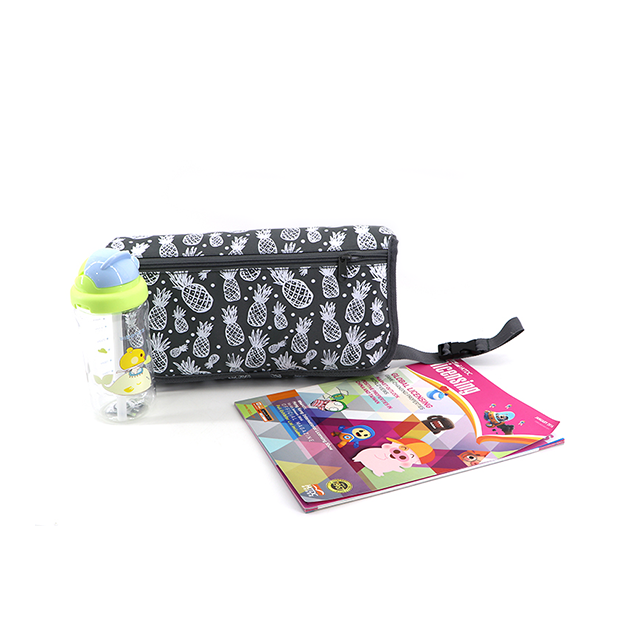
The modern baby gear market demands hyper-convenience. Parents now expect a portable baby changing mat to function as a standalone, minimalist diapering station. For baby brands, the challenge involves bridging these consumer demands with scalable, cost-effective OEM manufacturing. Developing a successful product requires moving beyond basic fabric-and-foam specs. Brands must engineer solutions offering one-handed operation, extreme durability, and strict chemical compliance. They must achieve these goals without destroying profit margins. This guide breaks down the structural, material, and compliance features you need to evaluate. You will learn how to design precise tech packs and shortlist reliable OEM manufacturing partners confidently.
Key Takeaways
End-user demand for "ultra-compact" travel solutions requires brands to prioritize advanced folding mechanics and lightweight, high-tensile materials.
Material selection (e.g., TPU-coated Oxford cloth vs. PEVA) dictates both the product’s retail positioning and its global regulatory compliance (CPSIA, REACH).
Adding modular storage features increases perceived value but introduces supply chain complexities in stitching and moisture retention.
Evaluating an OEM partner must hinge on their quality assurance protocols for seam integrity, toxicity testing, and prototyping turnaround times.
1. Defining Success Criteria for a Travel Changing Mat
Analyzing user feedback reveals stark realities about product performance in the wild. Parents use these items during extreme travel scenarios and frantic daily errands. Bulkiness and difficulty in deployment rank as the top causes for product returns. A high-quality travel changing mat must solve these specific problems directly. It must offer zero friction during stressful diaper changes in cramped spaces.
You must balance compactness against usability. Establishing the optimal folded footprint requires careful calculation. The mat must fit easily into standard diaper bags or minimalist daypacks. However, it cannot sacrifice the open surface area required for a growing toddler. If the deployed mat is too small, parents will discard it after six months. If it folds too thickly, they will leave it at home.
The "one-handed" standard is the ultimate usability metric. Success dictates a parent holding a wriggling baby can operate the product easily. You must engineer the mat so they can unlatch, unfold, and lay it out using only one hand. If a design requires two hands to manipulate snaps or untangle straps, it fails the basic consumer usability test.
2. Structural Engineering of a Foldable Changing Mat
Closure and Deployment Mechanisms
The hardware you choose directly impacts user experience and manufacturing costs. You must carefully weigh the pros and cons of different closure systems for a foldable changing mat.
Magnetic clasps: They deliver a premium feel and silent operation. Magnets allow for rapid, one-handed closure. However, they carry a higher unit cost and require careful placement.
Velcro (Hook and Loop): This remains a cost-effective and highly secure option. Unfortunately, it degrades over time. It also produces a loud tearing noise, which can wake a sleeping baby.
Buckles: These are ideal for attaching the mat to strollers or bags. They offer exceptionally high durability. Yet, buckles often require two hands to adjust and secure properly.
Hinge and Seam Durability
You must ruthlessly evaluate the fold lines. Continuous folding places immense stress on the waterproof backing and internal foams. If the hinges lack reinforcement, the exterior shell will eventually crack. Reinforced double-stitching at all major flex points is mandatory. This manufacturing step prevents tearing and extends the product lifespan significantly.
Modular Design Capabilities
Modern consumers love multi-functional gear. Utilizing heavy-duty zippers allows the actual mat to detach from the storage clutch entirely. This modular separation facilitates much easier machine washing. It also creates multi-use scenarios. Parents can carry just the lightweight mat for short trips, leaving the bulky storage section behind.
3. Material Science: Specifying a Waterproof Baby Changing Pad
Outer Shell and Surface Materials
Choosing the right fabric defines your product tier. You need a reliable waterproof baby changing pad surface that repels fluids instantly. Below is a comparison chart of the two dominant market materials.
High durability, aesthetic versatility (melange/prints), superior tear resistance.
Premium positioning and high-end outdoor travel lines.
PEVA is highly functional but can feel plastic-like. TPU-Coated Oxford cloth (typically 300D or 600D) elevates the tactile experience. It resists punctures from keys or sharp toys. It also allows brands to print custom, high-resolution patterns without fading.
Cushioning and Ergonomics
Comfort cannot compromise portability. Standard high-density sponge, typically ranging from 5mm to 10mm thick, balances foldability with baby comfort perfectly. Memory foam feels luxurious but compresses poorly under folding stress. Instead, consider integrated "pillow" bumps. Using slightly thicker foam specifically at the head section offers a massive return on investment. It dramatically increases consumer perceived value while adding minimal bulk.
Moisture and Odor Control
A diapering station encounters severe biohazards. You must establish strict non-porous surface requirements to prevent bacterial buildup. The fabric cannot absorb any liquid. Fast-drying capabilities are essential for parents cleaning spills on the go. Always secure zero-liquid-absorption warranties directly from your material supplier before greenlighting production.
4. Differentiating Your Diaper Changing Pad with Value-Add Storage
Integrated Wipes Dispensers
Storage transforms a simple mat into a complete diapering toolkit. A well-designed diaper changing pad must include integrated wipes access. Design considerations for the die-cut opening are crucial. The opening must align perfectly with standard soft-pack wipe dispensers used globally.
You must also mitigate moisture retention risks. Storing wet wipes inside a closed pocket can create mold if poorly ventilated. Alternatively, if the pocket is too open, the wipes dry out. Ensuring the pocket lining uses a moisture-barrier material prevents wipe evaporation during long-term storage.
Zipped Mesh and Elastic Pockets
Parents carry bulky items like rash creams, spare onesies, and large diapers. You must specify expanding mesh pockets. These pockets should comfortably hold three to four oversized diapers plus barrier creams. Crucially, these filled pockets cannot compromise the mat's ability to fold flat. Using four-way stretch mesh allows the pockets to expand outward rather than bulging inward against the folding hinges.
External Utility Features
Do not ignore the exterior of the folded clutch. Small utility features drive major user satisfaction. Incorporate reinforced D-rings for pacifier attachments or toy clips. Add discreet, drop-in zip pockets tailored for parental essentials like phones and keys. Finally, specify adjustable stroller straps or wrist lanyards. These external additions free up the parent's hands completely during transit.
5. Compliance, Safety, and Risks for an OEM Baby Changing Mat
Navigating Global Toxicity Standards
Infant products face the strictest regulatory environments worldwide. Designing an OEM baby changing mat requires flawless compliance. You must navigate CPSIA and CPSC regulations for the US market. The EU market mandates strict REACH compliance. These frameworks require mandatory testing for phthalates, lead, BPA, and heavy metals.
You cannot simply trust a factory's verbal assurance. Brands must demand verified, recent lab reports. Look for certifications from recognized bodies like SGS or Intertek. These reports must trace back to the manufacturer's specific raw material suppliers, not just a generic fabric batch.
Implementation Risks & QA
Manufacturing shortcuts will destroy your brand reputation instantly. Two specific risks demand rigorous quality assurance protocols.
Off-Gassing: Poorly cured plastics and cheap foams result in strong chemical odors upon unboxing. Parents are highly sensitive to smells near their newborns. Off-gassing leads to immediate 1-star reviews and mass returns.
Seam Delamination: Machine washing exposes the product to heat and agitation. This can destroy waterproof coatings if heat-sealing or stitching is sub-par. Your factory must employ high-frequency welding or taped inner seams to prevent water ingress.
Labeling and Law Tags
Legal compliance extends to the physical tags. Ensure your factory possesses the capability to accurately print and attach tracking labels. They must firmly sew in care instructions and safety warnings. These labels must comply strictly with regional laws, including US state-specific stuffed article regulations.
6. Decision Framework: Shortlisting Your Manufacturing Partner
White-Label vs. Custom Tooling
Selecting the right factory begins with your go-to-market strategy. You must assess whether to utilize the factory's existing molds or invest in custom dimensions.
Choosing existing white-label designs ensures a lower Minimum Order Quantity (MOQ). It also provides a much faster time-to-market. Conversely, custom tooling allows you to dictate proprietary storage layouts and unique folding dimensions. Customization requires higher upfront capital but establishes a defensible product moat against cheap competitors.
Evaluating Factory Capabilities
Never select an OEM based solely on a quoted unit price. Always request extensive "cut-and-sew" portfolios. High-quality manufacturers should demonstrate precise stitch density, measured in Stitches Per Inch (SPI). Look for clean finished edges bound with high-grade tape. Inspect their zipper installations for smooth tracking and reinforced endpoints. A factory failing these visual checks will fail mass production.
The Prototyping Phase
Setting firm expectations for sample iteration saves months of frustration. A standard timeline requires 10 to 14 days for a first-round custom sample. Once received, test the prototype ruthlessly. Wash it, fold it aggressively, and load the pockets. Establish strict criteria for approving the Pre-Production Sample (PPS). Never wire mass-production deposits until the golden PPS perfectly matches your technical specifications.
Conclusion
A commercially successful portable changing mat combines durable waterproof materials, true one-handed usability, and strict chemical safety.
Determine your final retail price point immediately. You must back-calculate your target manufacturing costs to ensure viable profit margins.
Finalize your technical spec sheet comprehensively. Detail every material layer, pocket dimension, and zipper grade before contacting suppliers.
Request initial physical samples from shortlisted, fully certified factories to verify their actual cut-and-sew capabilities.
Prioritize external lab testing through third parties to guarantee your product safely clears regional customs and regulatory audits.
FAQ
Q: What is the standard MOQ (Minimum Order Quantity) for a custom OEM baby changing mat?
A: Usually ranges from 500 to 1,000 units depending on fabric customization and whether standard or custom dyed materials are used.
Q: Can we request eco-friendly materials for our diaper changing pad?
A: Yes, recycled polyester (rPET) and organic cotton with non-toxic waterproofing are increasingly available, though they typically carry a 15-30% cost premium.
Q: How long does the OEM prototyping and manufacturing process take?
A: 2-3 weeks for sampling, followed by 30-45 days for mass production after PPS approval, excluding shipping times.
Q: Do OEM factories handle third-party safety testing?
A: While reputable factories use compliant materials, the brand (importer of record) is ultimately responsible for commissioning final third-party lab testing for certification.